
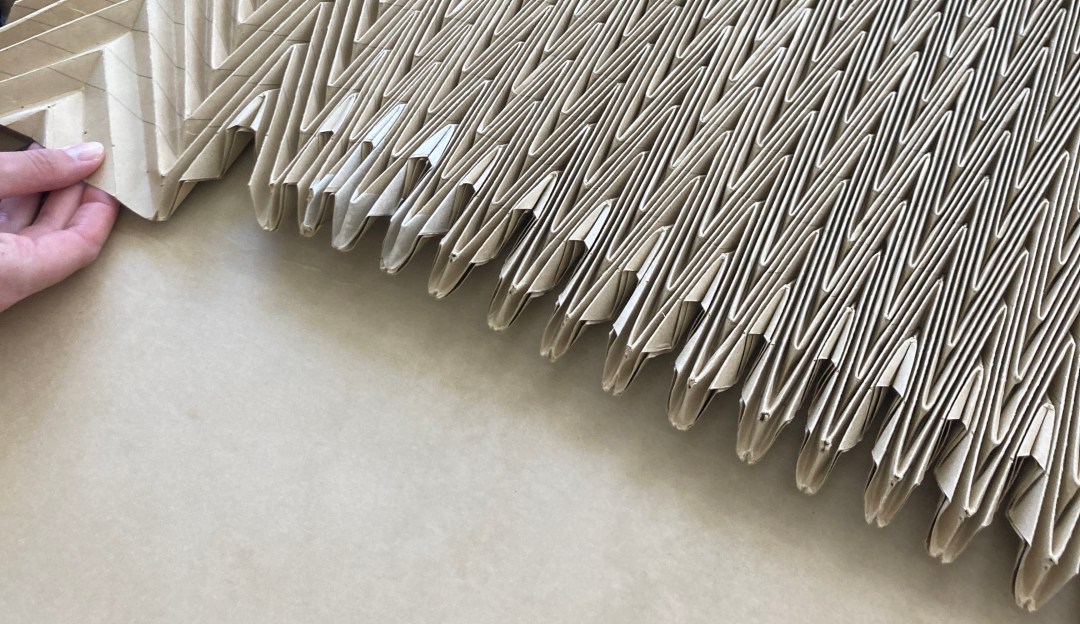
In June, designers from the Fold-project visited the University of Edinburgh and London to further study foldable designs and kirigami. During a field trip to London, the designers had a great opportunity to visit Ciment pleating, a company that has specialized in pleating services with a hand-crafted approach since 1925. They have an amazing selection of different patterns and pleating molds from several decades. Many of their works have been seen for example in costumes for movies, TV series and theater, and worn by public figures. Alongside the textile pleating for garments and costumes the company has also done commissions for artists, interior designers, and confectionery shop.
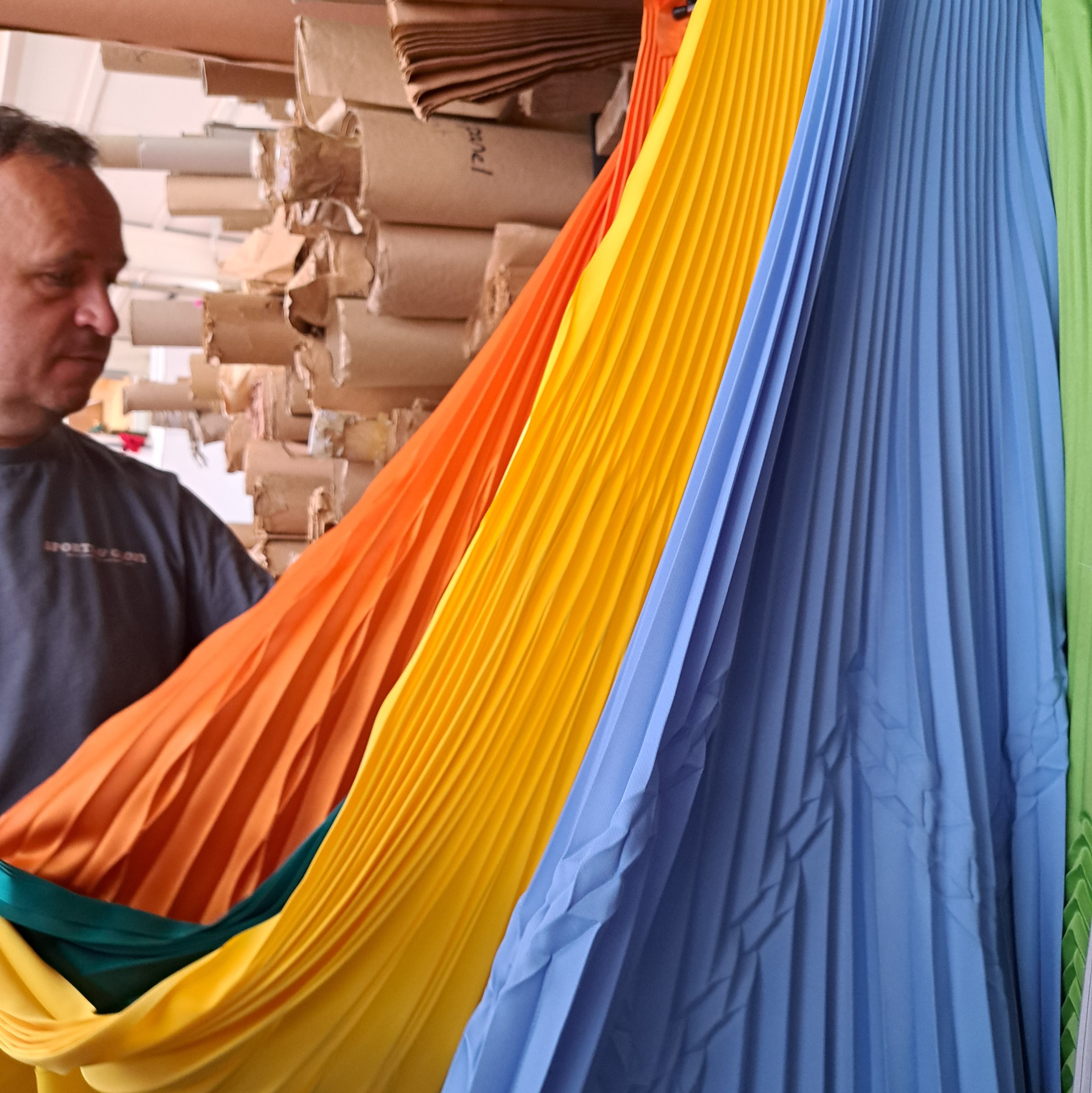
Variation of pleated fabrics.
The objective of the visit was to gain further understanding from companies working with foldable products and the methods and materials related to folding, as well as to understand the production processes of different folded materials. Ciment Pleating gave an insight on the pleating process and what kind of applications this method can provide, as well as what are the properties, limits, and requirements that different materials have in order to be pleated.
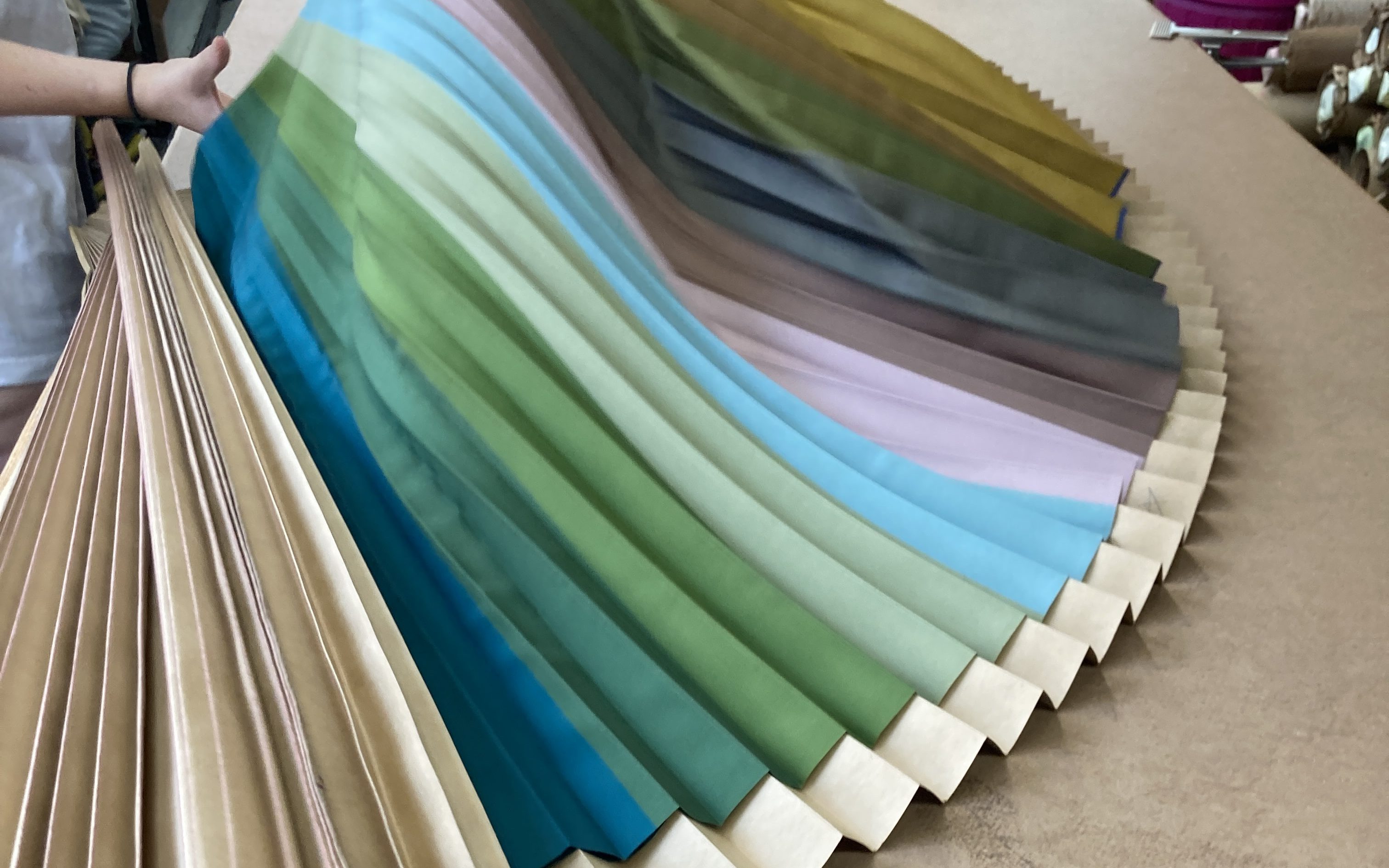
Unwrapping the pleating mold after the steam treatment.
In the pleating process, the textile is placed between two folded cardboard sheets, rolled tightly, and placed in a steamer. The heat of the steamer then sets the folded pattern on to the textile. Pleating is commonly done with textiles, but Ciment Pleating also has pleated leather, felt and brass mesh to name a few less conventional materials. The material used for the pleating molds is a special pleating cardboard which can tolerate the steaming process and therefore can ideally be reused several times. With thick materials the pleating pattern needs to be simpler or on a bigger scale since thicker and harder materials tend to damage the cardboard molds.
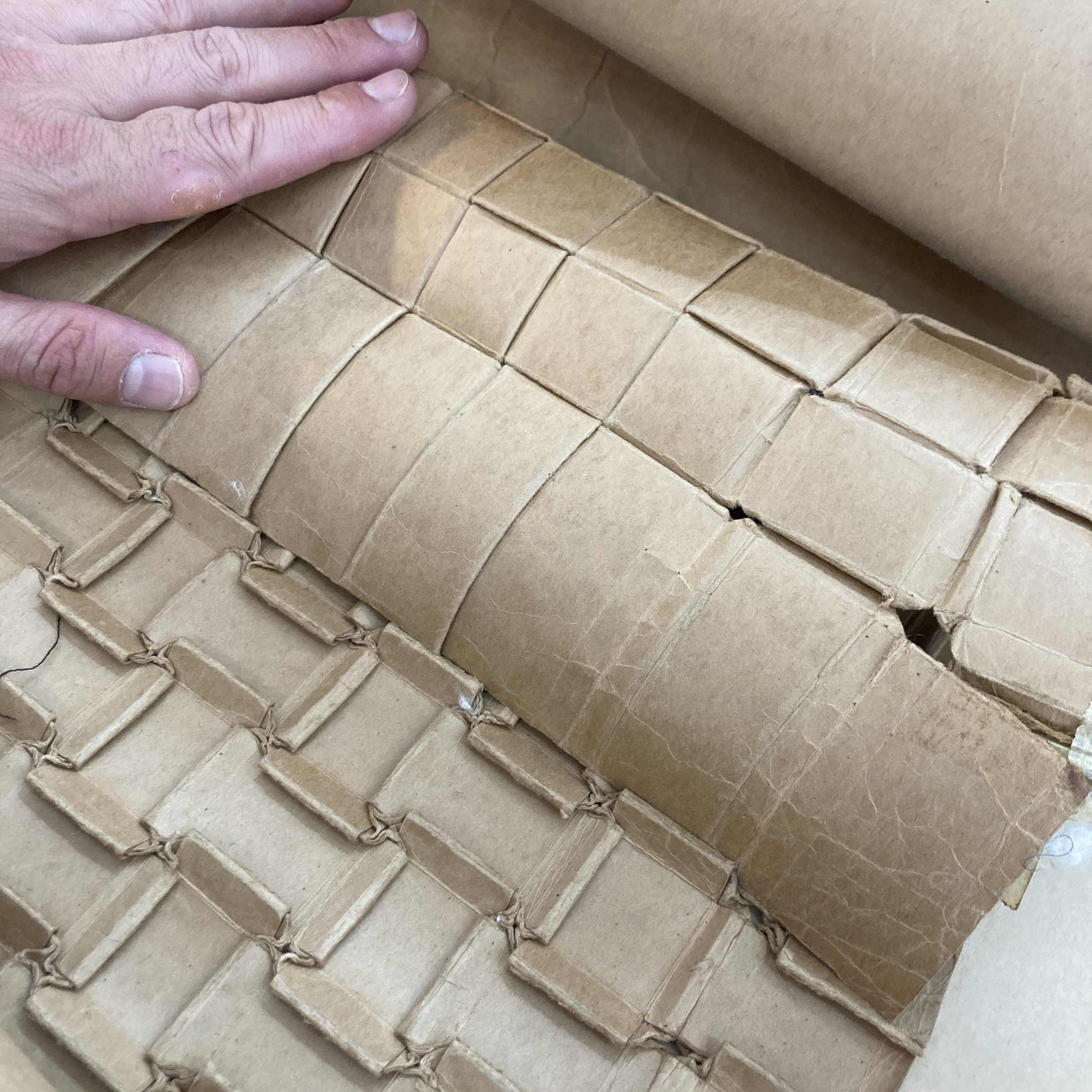
Complex pleating pattern.
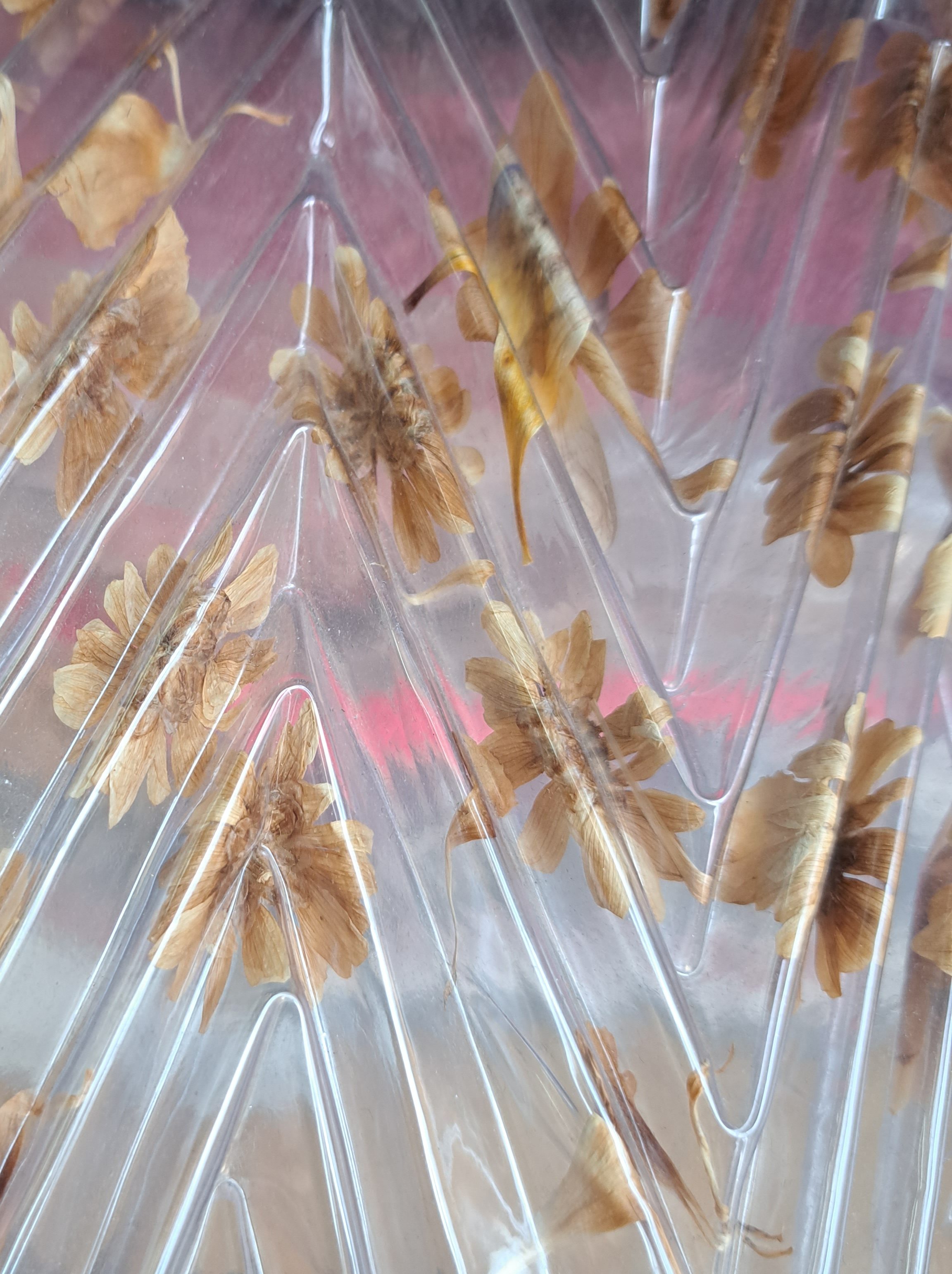
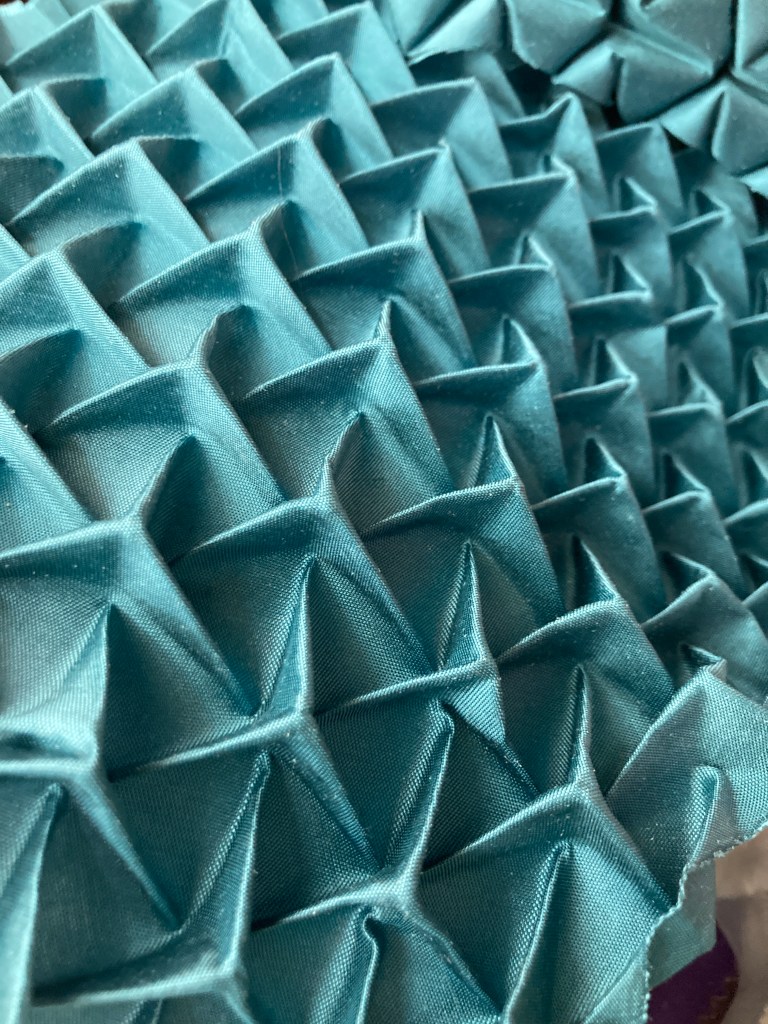
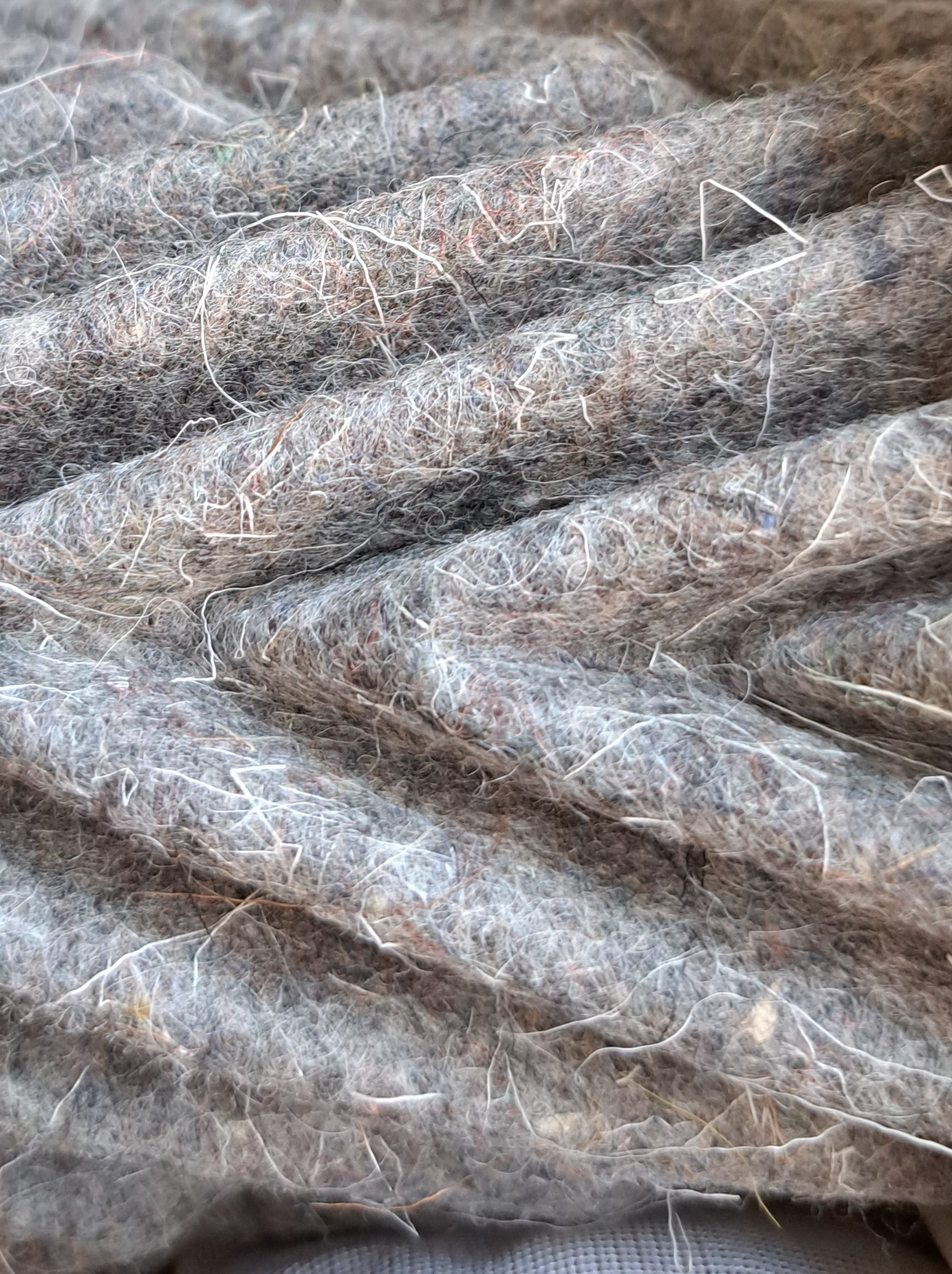
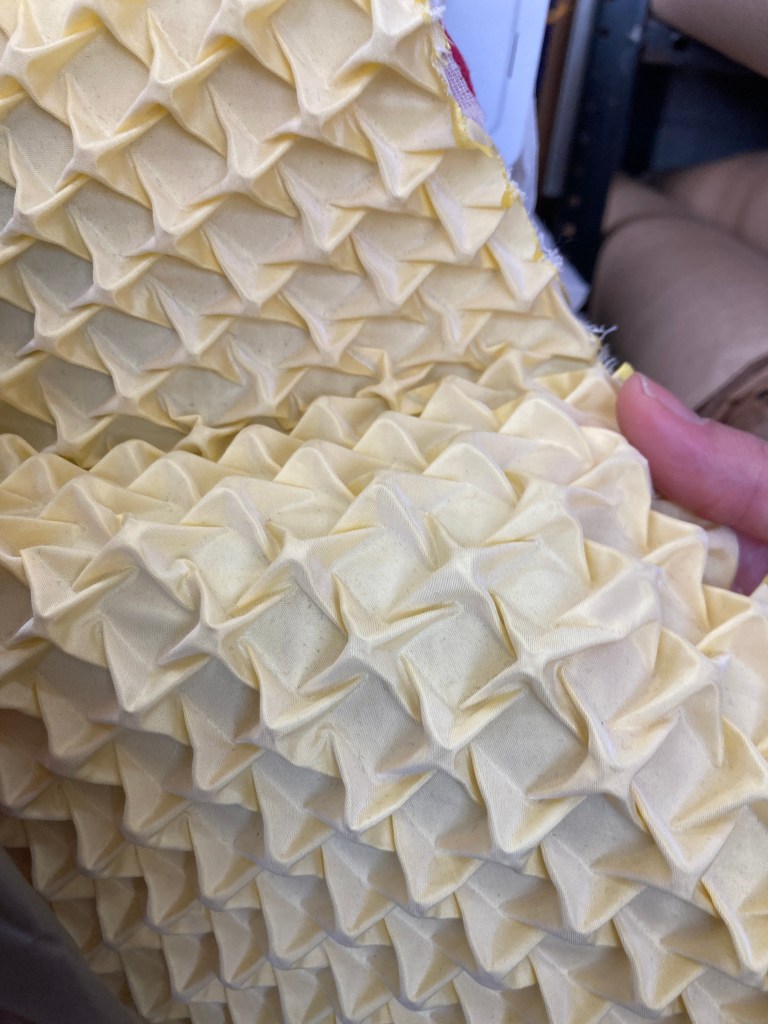
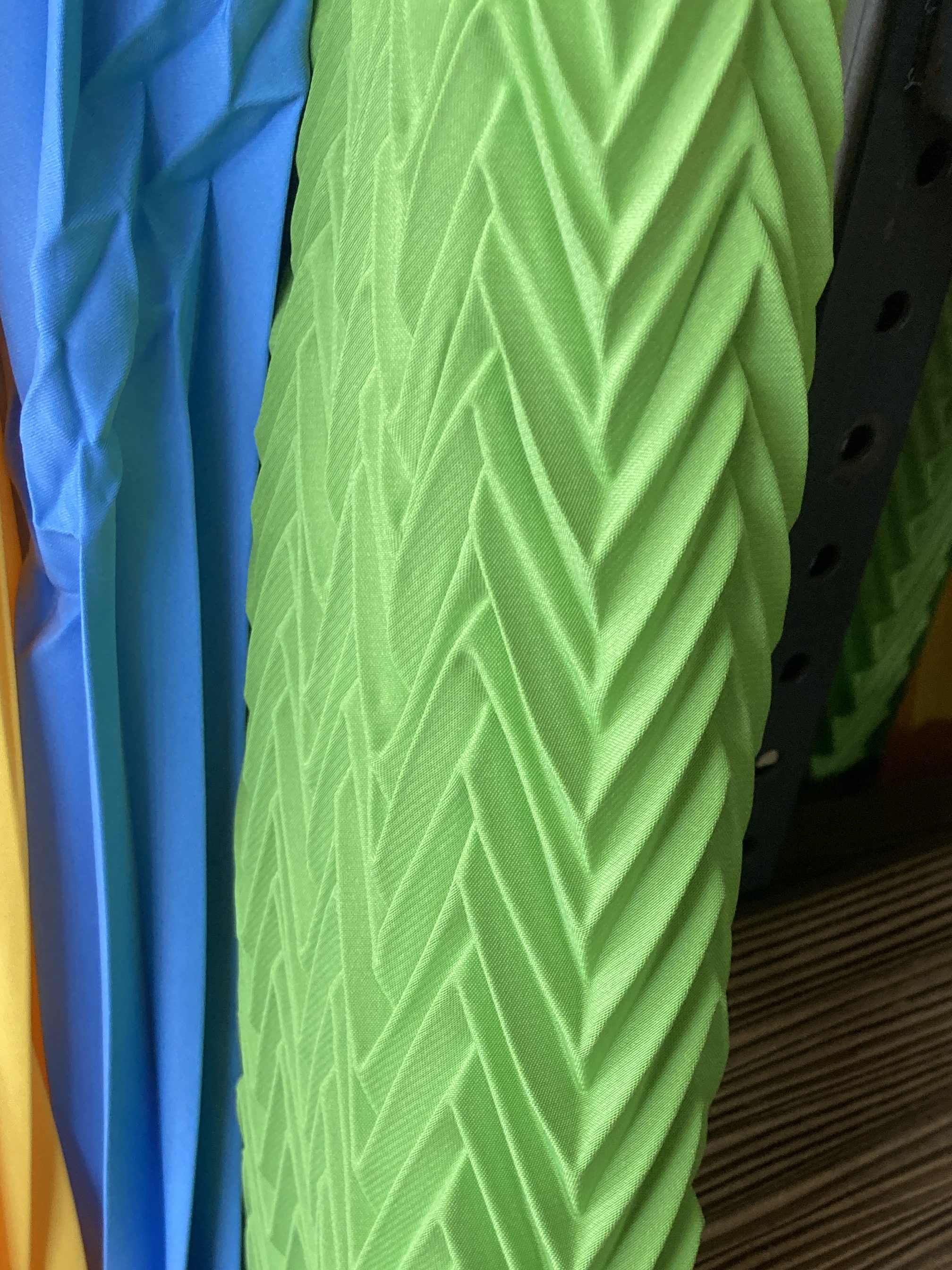

Various pleated samples.
There are very few companies in the EU focusing on this type of folding technique and the knowledge is in the hands of the craftsman. Ciment Pleating uses old French machinery from the 19th century that creates knife pleats and accordion pleats, but they are working mostly manually and the pleating molds are also mostly made by hand. According to Ciment Pleating they have anywhere between 500-1000 different pleating molds.
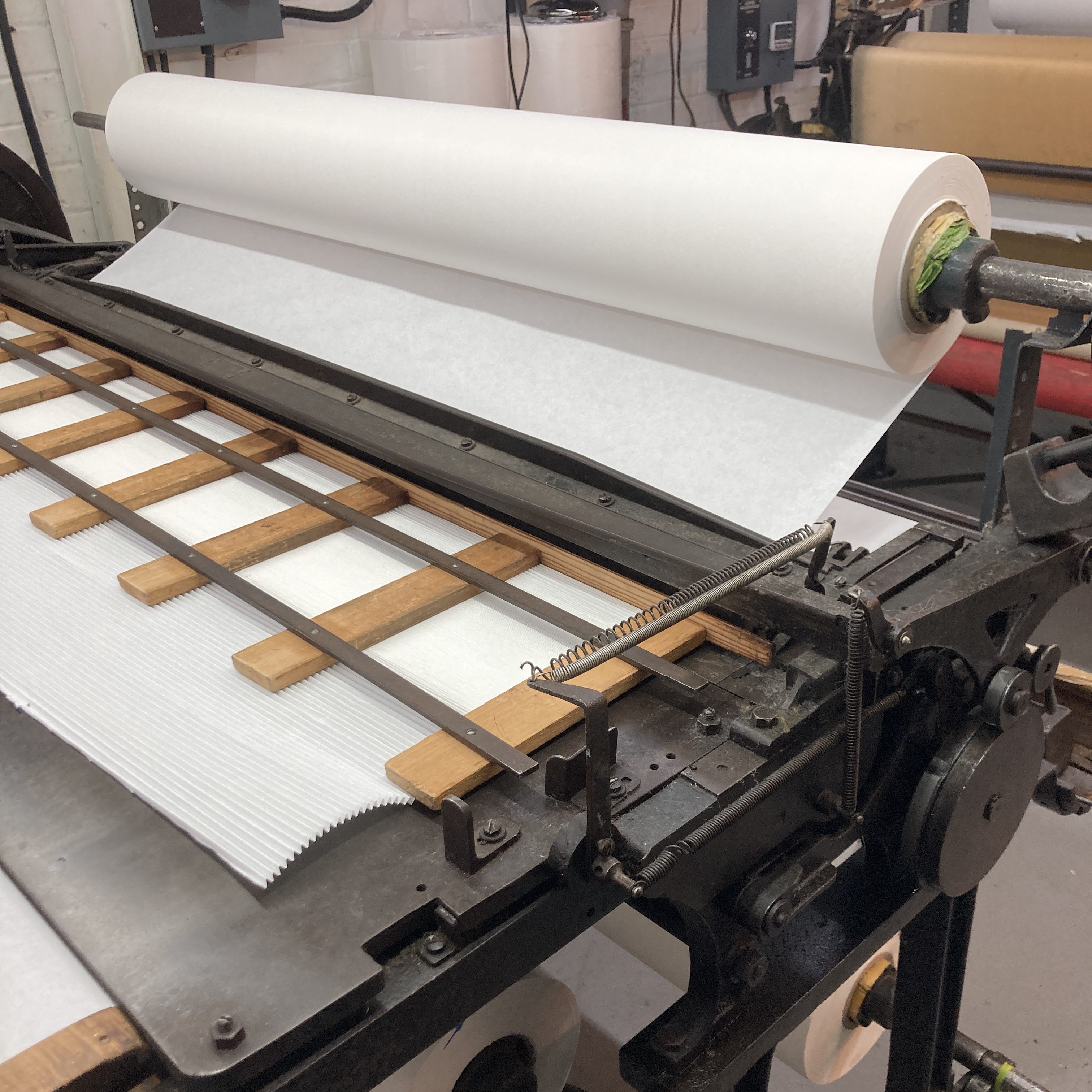
Knife pleating machinery from 19th century.
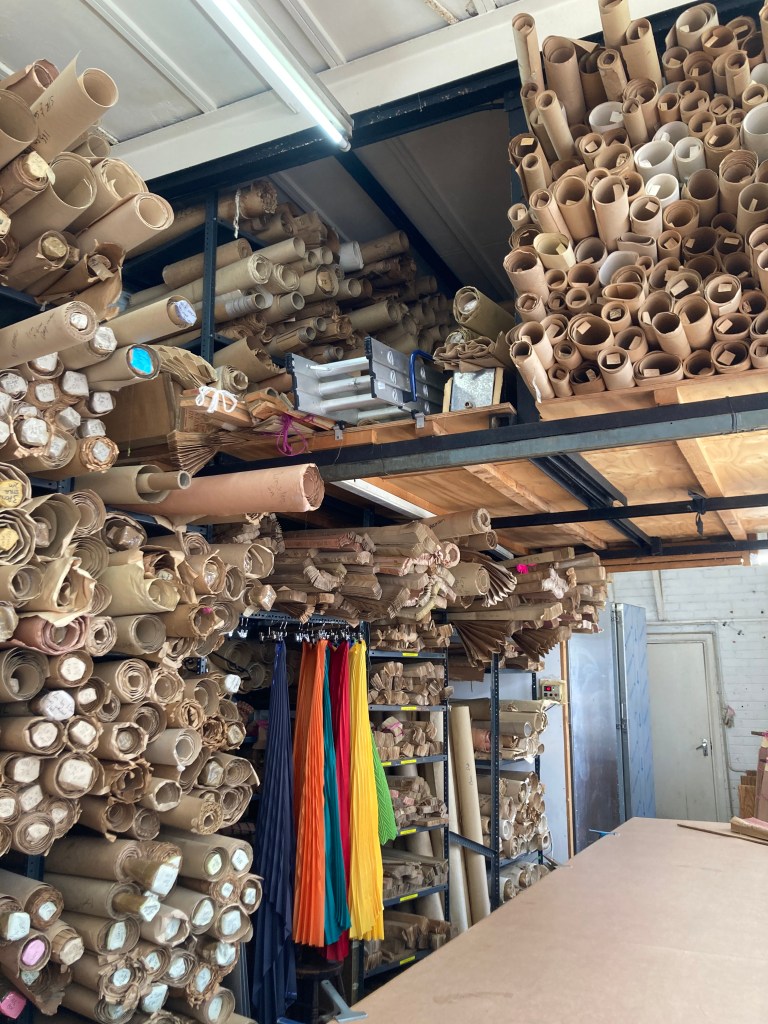
Wall full of pleating molds in the work studio.
The visit was an amazing possibility for understanding more about the craft and knowledge about pleating techniques and folds needed in their production. For more information about Ciment Pleating you can visit their website and follow their works on Instagram!
 Fold Project